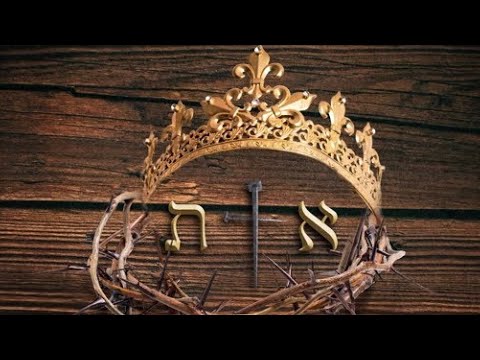
Why we keep the Sabbath on Saturday — and how the world ended up somewhere else.
Before there was a Jew or a Gentile, a church or a synagogue — before the law was given or a single commandment written down — there was the seventh day. “And on the seventh day God ended his work which he had made; and he rested on the seventh day… And God blessed the seventh day, and sanctified it” (Genesis 2:2–3). The Sabbath is not a Jewish custom that believers may politely decline. It is a creation ordinance — woven into the week itself by Elohim, blessed and set apart while the world was new.
You will not find the word “Saturday” in the Bible. You will not find “Sunday,” “Monday,” or any of our modern day-names either — those came centuries later, from Rome’s planetary week: Saturday is Saturn’s day, Sunday the day of the Sun. Scripture does something simpler and sturdier: it counts. The first day, the second day… and the seventh day, which God calls Shabbat — the rest. “The seventh day is the sabbath of the LORD thy God” (Exodus 20:10).
The biblical day runs from evening to evening — “from even unto even, shall ye celebrate your sabbath” (Leviticus 23:32) — which is why Shabbat begins at sundown Friday and closes at sundown Saturday.
In today’s unbroken seven-day cycle, that seventh day is the day English calls Saturday. And many languages never lost the trail: in Spanish, Saturday is sábado; in Italian, sabato; in Greek, Sávvato — every one of them the word Shabbat, still sitting in plain sight on the calendar.
Yeshua kept the seventh day: “as his custom was, he went into the synagogue on the sabbath day” (Luke 4:16). So did Paul, decades after the resurrection: “as his manner was… three sabbath days reasoned with them out of the scriptures” (Acts 17:2). And Isaiah looks past our age entirely, into the new heavens and the new earth, and still finds the Sabbath standing: “from one sabbath to another, shall all flesh come to worship before me, saith the LORD” (Isaiah 66:23). From creation to the world to come, Scripture knows one Sabbath.
The Sabbath is the front door to something larger. On the fourth day of creation, Elohim said the lights in the heavens would be “for signs, and for seasons, and for days, and years” (Genesis 1:14) — and the Hebrew word behind “seasons” is moedim: appointed times. From the beginning, the sun and moon were hung as the clock of heaven.
So the Bible keeps time by that clock. The day begins at evening (Genesis 1:5). The week counts to seven and rests. The month begins when the new moon appears — Rosh Chodesh, the head of the month. The year begins in the spring, in the month of Aviv: “This month shall be unto you the beginning of months” (Exodus 12:2). And onto that framework Elohim fastened His feasts — Passover, Unleavened Bread, Firstfruits, Shavuot, Trumpets, Yom Kippur, Tabernacles — saying of them, “these are my feasts” (Leviticus 23:2). Not Israel’s feasts. Not the church’s. His.
Our modern calendar keeps different time. Its months ignore the moon; its year begins in the dead of winter; its names honor Roman gods and emperors — January for Janus, March for Mars, July and August for Julius and Augustus Caesar. There is nothing sinful about using it for business — we all do — but it cannot find the appointed times. And Daniel warned of a power that would “think to change times and laws” (Daniel 7:25). The calendar did not drift by accident.
Here is why it matters: the Moedim are prophetic. Yeshua died on Passover, was buried into Unleavened Bread, rose on Firstfruits, and poured out the Spirit on Shavuot — to the very day. The spring feasts are fulfilled; the fall feasts — Trumpets, Atonement, Tabernacles — are still ahead. If the spring appointments were kept to the day, the wise will be watching the fall ones. That is why this ministry tracks the biblical months, the feasts, and the signs in the heavens — it is the whole reason this site exists. You cannot watch for the appointed times on a calendar that erased them.
Not by a verse — by history. In the centuries after Messiah, as the church grew more Gentile and drifted from its Hebrew root, Sunday gatherings spread. Then in A.D. 321 the emperor Constantine issued a civil decree commanding rest on “the venerable Day of the Sun.” Four years later the Council of Nicaea (A.D. 325) pressed the church further from the biblical calendar, deliberately separating the feasts — Passover first among them — from what it called the practice of the Jews.
None of that renumbered God’s week; no emperor or council has that authority. But it does explain, honestly and historically, how the day moved.
Not to be saved. Salvation is in Yeshua alone, and no day-keeping adds a feather’s weight to His finished work. We keep Shabbat because the One who saves us blessed it, sanctified it, kept it Himself, and called it a gift: “The sabbath was made for man, and not man for the sabbath” (Mark 2:27). It is a weekly appointment with our Creator that He never cancelled — a delight, not a burden (Isaiah 58:13–14).
Don’t take our word for it. Take the Berean way: “they received the word with all readiness of mind, and searched the scriptures daily, whether those things were so” (Acts 17:11). Open the Book, count to seven, and see.
Answer by Chadwick to a YouTube viewer comment on 07/18/2026